
If you want to make your bed more comfortable, the best place to start is usually with the most foundational piece: your mattress.
Whether it's adding a supportive topper or swapping out the whole thing, this single change can tackle a whole host of problems. We're talking about things like back pain, tossing and turning, and sleeping too hot or too cold. Get this part right, and you're well on your way to deeper, more restorative rest.
The journey to a truly comfortable bed begins and ends with your mattress. It is the single most important part of your sleep setup.
The tricky part is that mattresses wear out slowly, almost imperceptibly. The discomfort creeps up on you until one day you realize you've got a chronic problem. Waking up stiff, sore, or just plain tired even after eight hours are huge red flags.
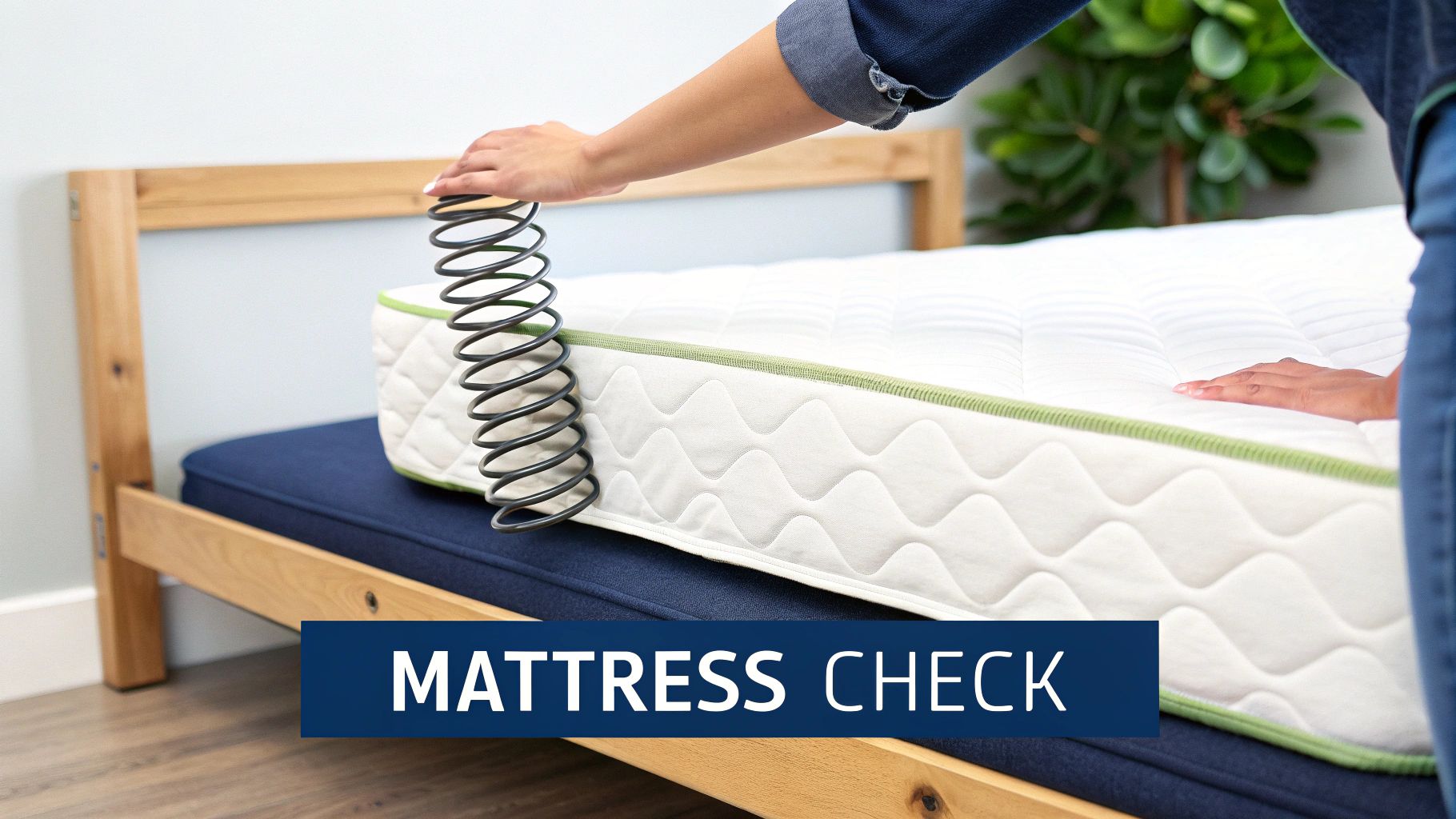
First things first, you need to do a thorough assessment. Strip the bed bare and take a good, hard look at the surface. Do you see a noticeable sag or dip right where you sleep? That "body impression" is a classic sign the support structure has failed, meaning it's no longer keeping your spine aligned.
Now, run your hands over the surface. Can you feel lumps, bumps, or maybe even the springs poking through? These are clear signs of wear that create painful pressure points and wreck your sleep quality.
Most people hear they should replace their mattress every eight years, but it's not just about age. Over time, mattresses become breeding grounds for allergens like dust mites and dead skin cells—not exactly a pleasant thought.
More importantly, the materials just give out. They lose the ability to support you and relieve pressure. An old innerspring mattress can lose a significant amount of its support, and aging foam stops contouring to your body the way it should.
This flowchart can help you visualize the decision-making process when you're trying to figure out what to do with your current mattress.
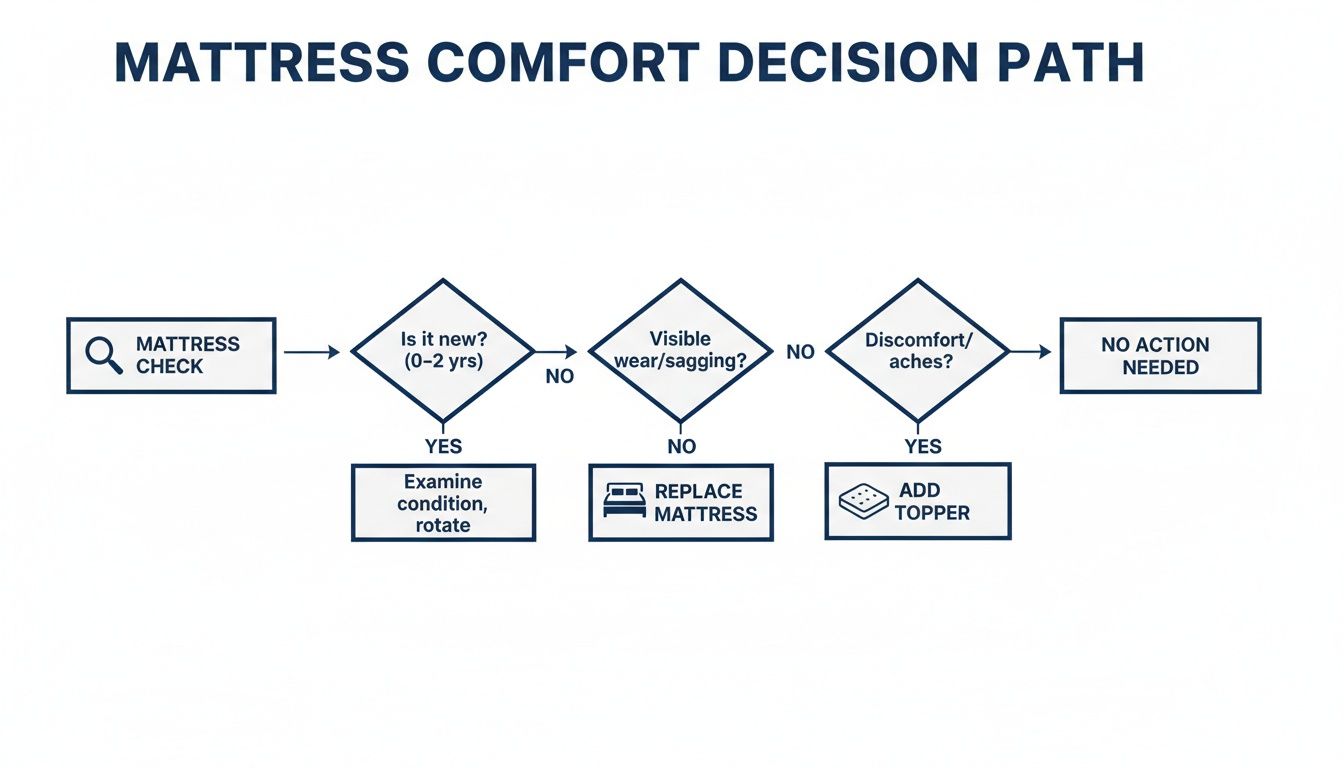
The key takeaway here is pretty simple: if you're consistently uncomfortable or you can see visible wear, it's time to take action. That could mean an upgrade, or it could mean a full replacement is needed to get your sleep back on track.
A worn-out mattress does more than just feel uncomfortable; it actively works against your body's need for restorative rest. Proper spinal alignment is non-negotiable for waking up pain-free, and a sagging mattress makes that impossible.
If a brand-new mattress is on the horizon, it's a good idea to do your homework. Our mattress buying guide offers 15 tips to a better mattress, helping you sort through choices like firmness, material, and type to find your perfect match.
Not quite ready to pull the trigger on a whole new mattress? A high-quality topper can be a total game-changer. This is a fantastic fix if your mattress is too firm, a little worn, or just doesn't have that feel you're looking for. A topper adds an extra layer of cushioning and support, directly targeting many common comfort complaints.
Here are a few popular topper materials to consider:
Once you've got your mattress sorted, it's time to think about what you're sleeping on and under. Your sheets and bedding are what your skin is in contact with all night, making them a super personal—and critical—part of your sleep setup. We're going to look beyond simple thread count and get into what really makes bedding feel incredible.
It’s a common myth that a higher thread count automatically means better sheets. While it can be a sign of quality, the actual fibre and the weave of the fabric play a much bigger role in how comfortable they feel.
The "feel" of your sheets really comes down to their material and construction. You could have two sets of cotton sheets that feel completely different, all because of the weave. Figuring out these distinctions is the key to finding your perfect match.
Let's break down the most common options out there:
The material itself is just as important. Natural fibres like organic cotton and bamboo almost always outperform synthetics like polyester because they actually breathe. This allows heat and moisture to escape, which is crucial for regulating your body temperature all night long.
In fact, some reports show that premium organic cotton and bamboo blend sheets can reduce nighttime tossing and turning by 30%. It’s a perfect example of how the right fabric improves sleep quality simply by wicking moisture away from your body.
Feeling a bit overwhelmed by the choices? It's completely normal. To make it easier, here’s a quick comparison of the most popular bedding materials to help you pinpoint exactly what you need for your best night's sleep.
| Material | Feel and Texture | Best For | Care Instructions |
|---|---|---|---|
| Cotton (Percale) | Crisp, cool, and matte. Like a freshly ironed shirt. | Hot sleepers and those who love a classic hotel-bed feel. | Machine wash warm. Tends to wrinkle, so remove promptly from the dryer. |
| Cotton (Sateen) | Silky, smooth, with a slight sheen. Drapes beautifully. | Anyone seeking a touch of luxury and a softer, warmer feel. | Machine wash on a gentle cycle with cool water to protect the fibres. |
| Linen | Naturally textured, airy, and gets softer over time. | Year-round comfort, especially in warm climates. Great for a relaxed, casual aesthetic. | Machine wash cool and tumble dry low. Embracing its natural wrinkles is part of the look! |
| Bamboo (Viscose/Rayon) | Incredibly soft, smooth, and light. Similar to silk. | Hot sleepers, people with sensitive skin, and eco-conscious shoppers. | Wash in cold water on a gentle cycle. Avoid high heat when drying. |
Ultimately, the best material is the one that feels best against your skin and suits your body’s temperature needs. Don't be afraid to invest in a quality set—it makes a world of difference.
A truly comfortable bed is one that can adapt, whether it’s a chilly winter night or a sweltering summer evening. The secret? It's all in the layers. Instead of relying on a single, heavy comforter, building your bed with multiple layers gives you ultimate control over your comfort.
Start with your fitted and top sheets as the base. From there, you can add or remove layers to dial in the perfect temperature and weight for how you feel at that moment.
A well-layered bed might look something like this:
Layering is about more than just looks; it’s a practical strategy for personalized comfort. It allows both you and a partner, who might have different temperature preferences, to easily adjust the bedding to suit your individual needs without waking each other up.
This approach transforms your bed from a static setup into a dynamic comfort system that works for you. It ensures you're never too hot or too cold, which is one of the most common reasons for a restless night.
Of course, putting together a collection of high-quality bedding is an investment. To get a better sense of what to budget for, check out our guide on how much sheets cost. By choosing the right materials and mastering the art of layering, you’re well on your way to creating an inviting, adaptable, and ridiculously comfortable bed.
A premium mattress is a fantastic start, but it's only half the story. To truly make your bed more comfortable, you have to look at the entire support system. Think about it: even the world's best mattress will feel awful if it's paired with a lumpy, unsupportive pillow or a noisy, sagging bed frame.

Your pillow and bed base are the essential co-stars in your sleep setup. The pillow is responsible for aligning your head and neck, which is key to preventing stiffness and pain. Meanwhile, your bed base provides the foundational support that allows your mattress to perform exactly as it was designed to. Ignoring either of these can completely undermine all your other efforts.
The "perfect" pillow is deeply personal and depends almost entirely on how you sleep. The goal is simple: keep your head, neck, and spine in a neutral, straight line. A pillow that’s too high or too flat will force your neck into an unnatural angle, leading directly to those frustrating morning aches.
Your dominant sleep position is the best guide here.
Navigating the world of pillows can feel a bit overwhelming, but starting with your sleep style makes it much simpler. If you're really struggling with neck pain, our guide on how to choose the right pillow for neck pain offers more detailed advice to help you find some lasting relief.
Your pillow isn’t just a headrest; it’s a crucial tool for spinal alignment. The wrong one can be the hidden culprit behind persistent neck stiffness, headaches, and even shoulder pain.
Now, let’s talk about what’s underneath the mattress. Your bed base—whether it's a simple frame, a platform, or a box spring—provides the essential foundation for your entire sleep system. A weak or improper base can make a brand-new mattress feel uncomfortable and can even cause it to wear out prematurely.
Give your current frame a quick inspection. Does it creak, squeak, or groan every time you move? Any noise is a clear sign of instability, which means it isn't providing the consistent support your mattress needs. Check for loose bolts, cracked slats, or any visible sagging. A good foundation should be completely solid and silent.
The type of base you need often depends on your mattress, too. Most modern foam and hybrid mattresses, for instance, require a solid or slatted platform base for even support. A common mistake is putting a new memory foam mattress on an old, worn-out box spring, which almost always leads to sagging and discomfort.
Here are a few popular options to consider if you're thinking about an upgrade:
Making sure your mattress has a solid, appropriate foundation is a non-negotiable step toward building a more comfortable bed. A sturdy, quiet frame ensures you get every ounce of comfort and support you paid for when you bought your mattress.
Getting exceptional comfort is about more than just your mattress and sheets. A truly comfortable bed is one that exists within a peaceful, tranquil environment—and the good news is, you have complete control over creating that space.
Think of your bedroom as a sanctuary. It should be the one place that signals to your mind and body that it's time to unwind, unplug, and recharge. By fine-tuning a few key environmental factors like temperature, light, and sound, you can seriously upgrade your sleep quality and make your bed feel like an irresistible retreat.
One of the biggest levers you can pull for better sleep is your room's temperature. Your body's core temperature naturally dips to prepare for sleep, and a cool room helps that process along. The sweet spot for most people is somewhere between 15.5 and 19.5 degrees Celsius.
Keeping things cool year-round just takes a bit of strategy. In the summer, lightweight and breathable bedding is a must. Pair those airy linen or percale sheets with a fan to keep the air moving, which has a natural cooling effect on your skin.
When the colder months roll in, the goal is to stay warm without turning your room into a sauna. A heated mattress pad is a game-changer here. It provides targeted warmth from underneath, so you can keep the air in the room cool while staying perfectly toasty under the covers. This is a much better approach than cranking the thermostat, which often leads to a stuffy, dry-air feeling.
Temperature isn’t just about comfort; it's a powerful biological cue. A cool, dark, and quiet room works with your body's natural circadian rhythm, making it far easier to fall asleep and stay asleep.
Light is the number one signal that tells your brain it's time to be awake. Even tiny amounts of it—from a streetlamp, a charging light on your phone, or the early morning sun—can throw your sleep cycle out of whack.
Making your room as dark as possible is one of the most effective changes you can make.
By taking control of the light, you send a clear "it's nighttime" message to your brain, making your bed the perfect final destination.
Sudden or annoying noises are a huge cause of sleep disruption. Even if you don't fully wake up, noises can pull you out of the deep, restorative stages of sleep. Your goal should be to create a consistent, predictable soundscape.
A white noise machine is an incredible tool for this. It generates a steady, soothing hum that effectively masks more jarring sounds like traffic, a snoring partner, or noisy neighbours. This creates a stable audio backdrop where your brain isn't on high alert and can finally relax.
If outside noise is a constant battle, you might want to consider options for soundproofing windows for quieter living. Even simple additions like heavy curtains or a thick rug can do a lot to absorb sound and quiet things down.
Our sense of smell is wired directly to memory and emotion, making it a powerful tool for relaxation. Weaving calming scents into your bedtime routine is a great way to signal that it's time to wind down.
An essential oil diffuser is an easy way to get started. Scents like lavender, chamomile, and bergamot are famous for their calming effects. Just a few drops in a diffuser about 30 minutes before you climb into bed can transform the atmosphere, turning your bedroom into a true sleep sanctuary.
Everyone's sleep needs are a little different, and a standard setup doesn't always cut it for the deep, restorative rest we're all chasing. If you're dealing with specific issues—like a partner who tosses and turns, waking up too hot, or just feeling restless—it's time for a more targeted approach. Think of this as the troubleshooting section of your sleep guide.

When you start fine-tuning your bed for your exact needs, you can finally put those nagging sleep problems to rest.
Sharing a bed is great, until it isn't. The number one complaint I hear from couples is about motion transfer. You know the feeling—your partner rolls over, and it feels like a tidal wave just hit your side of the bed, jolting you awake.
If that sounds painfully familiar, your mattress is probably the culprit. Old-school innerspring mattresses are notorious for this, as all the springs are interconnected. The fix? A mattress built to isolate movement.
Here are your best bets:
For couples with seriously different ideas of what's comfortable, the gold standard is a split king. It’s essentially two twin XL mattresses on a king frame. Each of you gets to pick your perfect mattress firmness and material, completely eliminating motion transfer and settling the "too hard/too soft" debate once and for all.
Waking up in a sweat is a surefire way to ruin a good night's sleep. While breathable sheets are a solid first step, sometimes you need to call in the reinforcements to really keep your cool.
Many modern mattresses are designed with cooling tech built right in. Gel-infused memory foams, for instance, are made to draw heat away from your body. Some higher-end models even use phase-change materials (PCMs), which are smart fabrics that actively absorb your body heat when you're warm and release it back if you get cold.
There's a good reason for this trend. Surveys show that 68% of people report better sleep after switching to a breathable hybrid mattress, which combines coils for airflow with cooling foams.
A cooling mattress topper can also make a world of difference without the cost of a brand-new mattress. Look for options made from gel foam, latex, or even wool—they're all great for promoting airflow and wicking away moisture.
For someone who consistently sleeps hot, this isn't about luxury; it's a necessity. Investing in cooling technology is a direct investment in deeper, uninterrupted sleep.
If your biggest challenge is a mind that won't switch off or a body that can't seem to settle down, a weighted blanket could be the simple solution you've been looking for. These blankets are filled with tiny glass beads or pellets, creating a gentle, even pressure over your whole body.
This is called Deep Pressure Stimulation (DPS). That steady, comforting pressure helps to calm your nervous system, dialing down feelings of anxiety and creating a sense of security. It’s often described as a gentle, all-night hug.
For lots of people, this calming effect not only makes it easier to fall asleep but also reduces tossing and turning throughout the night. A good rule of thumb is to choose a blanket that's about 10% of your body weight. This gives you enough pressure to be effective without feeling trapped.
Of course, a comfortable bed is just one piece of the puzzle. Building good habits around your sleep is just as important. For more on that, check out these 3 habits that can improve your sleep quality.
Even with the best advice, sometimes you just need a quick answer to a specific problem. As you work on making your bed more comfortable, a few key questions tend to pop up again and again.
Here are some straightforward answers to the most common issues people run into on their journey to better sleep, from dealing with a rock-hard mattress to solving problems for couples and hot sleepers.
The quickest, most effective way to deal with a mattress that’s too firm is to add a mattress topper. This is by far the best route for adding a cushioning layer without having to spring for a whole new bed.
A 2- to 4-inch memory foam topper is brilliant for this. It’ll contour to your body, cradle your hips and shoulders, and relieve the pressure points that are probably causing you discomfort. If you're chasing pure plushness, a down or microfibre-fill topper can give you that luxurious, cloud-like feeling on the surface.
One quick tip from experience: make sure your fitted sheets have deep enough pockets to handle the extra height. If not, you’ll be fighting with corners popping off all night long, which is a whole other kind of uncomfortable.
If you’re constantly waking up too warm, the first thing to look at is your bedding. The name of the game is focusing on natural fibres known for their breathability and ability to wick moisture away from your body.
Here are the top choices for staying cool:
You’ll want to steer clear of synthetic fabrics like polyester or microfibre sheets. They’re notorious for trapping heat and making you sweat.
For the best support and hygiene, you should plan to replace your pillows every 1 to 2 years. That might sound frequent, but over time they lose their structure and become a hotspot for allergens like dust mites and dead skin cells.
There's a simple test you can do. Fold your pillow in half and see if it springs back. If it just lies there, limp and folded, its supportive life is over. A good pillow protector can certainly help keep it fresh, but it won't stop the fill from breaking down on the inside.
A pillow's job is to provide consistent support for your head and neck. Once it has flattened and lost its loft, it can no longer maintain proper spinal alignment, which is often a hidden cause of morning neck pain and stiffness.
This is a classic motion transfer problem, and it's incredibly disruptive. The best long-term fix is a mattress that excels at motion isolation. Memory foam and latex mattresses are the champions here, as they absorb movement rather than sending it across the bed.
If you prefer the feel of springs, look for a mattress with individually wrapped pocketed coils. Because each spring moves on its own, you won't feel every toss and turn from your partner. For a complete solution, a split king bed—which is really just two twin XL mattresses on a king frame—eliminates the issue entirely.
As a more budget-friendly first step, a thick memory foam topper can also help dampen some of the movement on your current mattress.
At Gotta Sleep, we believe a comfortable bed is the cornerstone of a healthy life. Explore our collection of premium mattresses, supportive pillows, and breathable bedding designed to help every Canadian get the restorative sleep they deserve. Find your perfect sleep solution at https://gottasleep.com.



